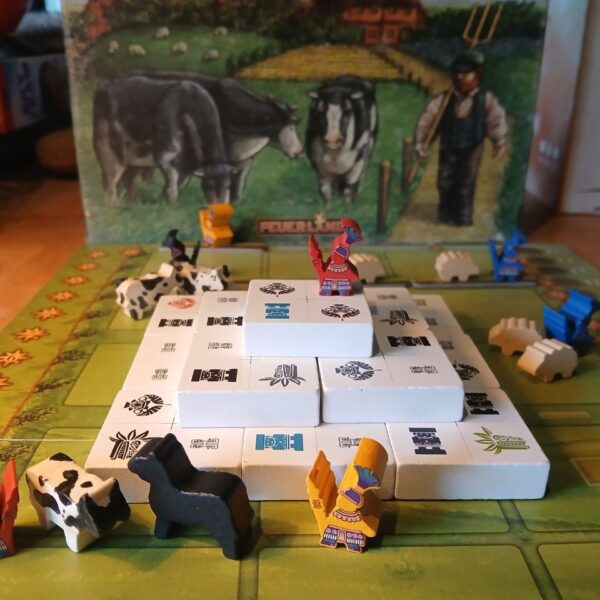
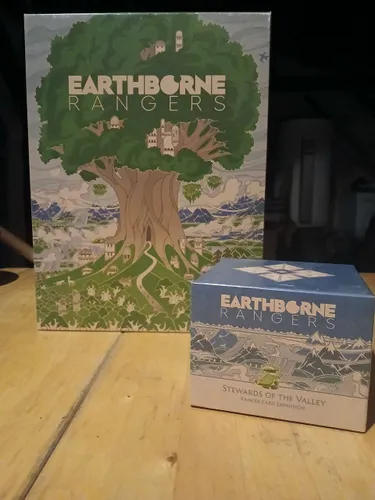
This should not be the only review you read about this game. My Decolonial Reviews will focus on decolonial elements. I will not explain the rules. I will not give it a number rating, and indeed, if you have already familiarised yourself a little with it, you might get more out of this review. If you want to skip the decolonial part, here’s my review: If you have the spare cash go buy Earthborne Rangers, Moments on the Path, and Stewards of the Valley right now.
Ok, so let’s start talking about Vantage. Wait Vantage? Yes.
Over and over again in Vantage you crash land on an alien world and throw yourself into a story that burns bright for a while and then dims as you place the box lid back over the contents. Next time you open that box of adventures, there will have been no lasting consequences of any kind from the choices you made before and you will be completely free to burn bright again once more, in any way you like. There will never be any lasting consequences, ever. And though you can play it as a multi-player experience, you are always acting, in this alien world, as an individual, alone. For more on that last point watch No Pun Included’s Review. And for a further discussion of that point, see the conversation with Jamey, designer of Vantage, in the comments below.
Earthborne Rangers trades this libertine individualism for a very different kind of story. When you begin you find yourself not blazing through alien worlds, but in the very heart of a tight knit community. You have just graduated as a ranger, a capable adventurer, who walks the valley from settlement to settlement, lending a hand, and, if the forces of life turn dangerous, threatening peace and survival, you may choose to throw all your energy into protecting your community. Or not, but no matter what you choose to do, there will always be consequences. Earthborne Rangers is definitely one of those adventure stories that holds the weight of interconnectedness, and the fact that our decisions matter, make the stories feel important and real.
I have seen some people complain that all of the NPCs that they meet in ER are boring. Everyone is too peaceful, there are no dangerous dropouts, liars, thieves, etc. I think this critique says more about the critiquer than the game. The social setting of Earthborne Rangers is far less like the current daily reality of European and North American societies, and more like the social realities of the tight knit communities that many of us who come from colonized cultures recognise as our own. Ancestors are venerated; community elders are deeply respected; a certain interconnectedness weaves us together. And this isn’t just in the story and theme–the mechanics reinforce a different set of values. As we adventure along side members of the community, lend them a hand, or even get them out of tight spots, we expand and grow as rangers. Who we literally are is made up of our deck of cards, and little pieces of those other people–their wisdom, knowledge, skills—make their way into our decks. The community weaves through all of us, and we become stronger together. In those types of societies, when an individual became too disruptive to social life, they could always leave, or in the worst case scenario, be forced to leave. In our modern nation state life that’s unthinkable, we just incarcerate.
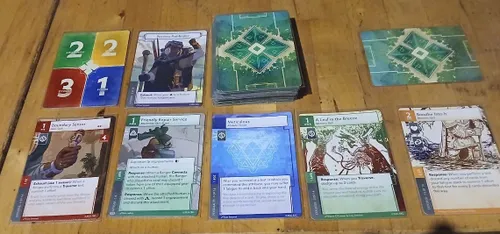
Three fundamental decolonial critiques of Western colonial culture are: that it is universalistic (the West has the one truth to be brought to the rest of the world–Christianity, rationalism, science, capitalism, etc); that everything is disconnectable and not interconnected, and, as a consequence of disconnection the third element is individualism. Those core cultural ideas came with the force of power, domination, and supremacy whose consequences were colonialism, slavery, and genocide.
Within a logic European disconnection it makes sense that there are hard lines in between places. That cities, towns, forests, rivers, all of these things are discretely different things, and though a river might run through a city, it has thick boundaries between which part is river and which part is city. We don’t consider floods to be a natural part of the that union, nor do we usually lose much time thinking about the toxic runoff draining into the river and everything downstream.
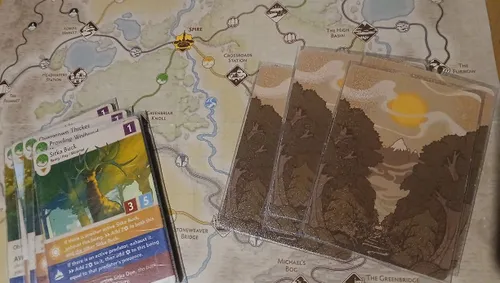
So it makes complete sense to me that gamers are having a hard time understanding why the terrain set and the location set join together to create the path deck that we encounter as we traverse from place to place. Of course nature and place blur lines, especially in a valley such as this. The settlements are small and nature is vibrant. What is odd to me is not the way path decks are made in ER, but rather that we have normalized RPG expectations that things happening on the travel map suddenly disappear when you enter a location. That lion that was chasing me vanishes because I stepped over a border. Everything has a thick line around it, and most RPG worlds lose the fluidity of reality, the interconnectedness of the world. Earthborne Rangers, through its fundamental game mechanics, manages to give us a world that flows from one place to another.
Where as in Vantage, everyone playing is truly alone, Earthborne Rangers allows us to build teams of deeply complementary individuals, emphasising our interdependence, and strength through connectedness.
Force can be used sometimes, when interacting with nature, but ER creates an enormous play space in which we can navigate a world of dangers without we ourselves inflicting excessive harm on that world.
Perhaps one of the biggest surprises for me was the spiritual grounding of the game world; the fact that ancestors inhabit a rich and alive spirit world, with which we can sometimes come into contact, connects me back to my own culture, whose precolonial spiritist strands carry on to this day.

So do all of these things mean that Earthborne Rangers is a decolonial game? Is it Indigiplay? Nope. Would that decolonialism were so simple. Let’s talk about why.
Imagine a colonial slave society where a newspaper is fomenting rebellion. Let’s say the newspaper is run by slaves, it’s an underground newspaper, and as the rebellion gains traction, the minds behind the newspaper adapt and react in harmonious tandem with the revolution itself. They are one and the same. Now let’s say instead that it’s a newspaper run by someone from the colonizer class—a well wishing liberal who feels bad for the state of things. As the rebellion gains traction and begins to threaten the colonial class in ways the well wishing liberal did not foresee or expect, she might be tempted to use that newspaper to dampen the more radical edge of the revolution, or perhaps even turn against it entirely. When it comes to making stories that have the power to help us on our path to overthrowing the legacy of colonialism that insists even today that our colonized cultures were and are inferior to European cultures, then it matters who is telling the stories and why. That is why you might have heard of “white saviorism” as a problem. When a supposed inferiority is precisely what we are fighting, no one can come and save us. We can only do it ourselves. We (people from colonized cultures) have to be the ones to tell our own stories of empowerment. Those are the only true decolonial stories.
This is precisely the problem that Spirit Island
ran into. It’s an incredible game. It’s in my top ten. I have all of the expansions and delve into it regularly, but because of the designer’s white positionality, perhaps precisely because he didn’t want to take the place of telling the story of the indigenous people in their fight against colonialism, he ended up telling a story in which our protagonism is absent, in which we are mostly passive pawns of greater powers. And that is a story that colonialism itself likes to tell, so in his attempts to break out of the pattern of colonial games (Spirit Island was billed as the anti-Settlers of Catan), he didn’t manage to do it.
It’s a great game, but it’s not actually a decolonial game, it’s not Indigiplay, in the way Winter Rabbit, or Nunami, or Wolves is. It’s not Indigiplay for the simple fact that we aren’t telling the story.
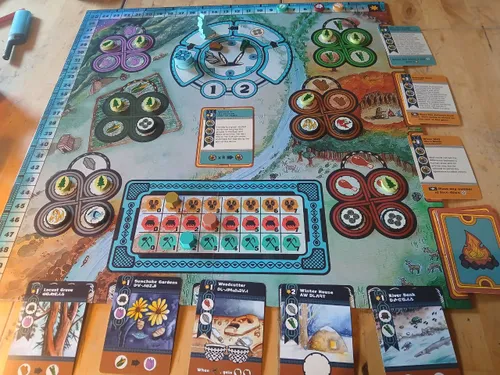
Now I want to make one thing absolutely clear, I am not putting the identity of the makers of Earthborne into a box. It very well may be that some of them have roots in colonized cultures and want to tell stories outside of the dominant Western paradigm. This isn’t about the designers of the game. But for Earthborne Rangers to really be an Indigiplay game it would have to have positioned itself as such, its storytellers would be explicitly out as coming from non European cultures, telling new decolonial and post-colonial stories, precisely the way that Coyote and Crow does, as it creates its own magical sci-fi world filled with power and play in communities whose indigenous inhabitants never had to know the evils of colonialism.
And there’s more. Let’s say I want to do a decolonial reading of Earthborne Rangers as I play it. There are elements of the game that present challenges.
But first, if it wasn’t already super clear then let me make it so: I absolutely love Earthborne Rangers. The world is immersive, alive, and largely in line with my culture and values. The gameplay is compelling, even addictive. I have played through the whole campaign in the base box, and the whole campaign in the expansion, Legacy of the Ancestors. This is a masterpiece game, a keeper for life.
The counterpoint to European universalism is not to come back at it with a different decolonial universalism (an oxymoron). The counterpoint to European universalism is pluriveralism. There is space in my universe for the story that Earthborne Rangers is telling me.
However, just for fun, if I was to try and create my own decolonial reading of the game, here are some of the challenges I would find–we’re really going to get into the weeds here in terms of Earthborne Rangers history and lore as well as decolonialism, but hell, this website is for geeks, so here goes!
Right out of the gate, in the bits of world building lore at the beginning of the rulebook, the trader from outside of the valley, Ren Kobo, who has a love relationship with the valley, writes “[the town of] Spire is the center of civilisation in the Valley” (emphasis mine).
Civilisation?
Earthborne Rangers depicts a world in which the diverse societies of humanity share a sense of “mindfulness and a drive to live in harmony with the natural world instead of apart from it or above it.” These societies have crawled up from the arcologies their ancestors created in a moment of global crisis when humanity came together and saved itself from imminent catastrophe. Now, 2,500 years later, humanity transformed its relationship with nature. So far so fine, I enjoy the optimism for a change. But what is absent is the story of our reckoning with the huge wounds of racial and ethnic inequality that are open even today as a result of the same colonial capitalism that is driving us towards global eco-system collapse.
I promise, I’ll get back to the word civilisation. Indulge me in a little more decolonial pedagogy to set the scene please.
How do we deal with that colonial wound? I argue that we folk from colonized culture deal with it in many ways, and joyful decolonizing is one of them. But how do most white people deal with it? Putting our accomplices aside, primarily in two ways: The fascistic response, which we see in action today, is to deepen it. To try and smash the “inferior races” once and for all. Perhaps it’s not said so openly, perhaps it is, but we see those forces moving in the world today. The liberal response is to sort of pretend that the wound has healed when it hasn’t. We can smell its festering inequality even as liberals talk about a post racial society, about being color-blind. In our movies and shows we see plenty of black and brown characters, supposedly representing this new harmony, but they don’t really talk and act like black and brown people from our own different, colonized, wounded cultures. They aren’t us. They’re written by white people. They’re tokens. Cardboard cutouts. In this liberal response, we, as culturally different peoples, cease to exist, and our varied skin tones are used to paint a picture of a bland harmony, where the culture that remains is the unspoken universal one. Basically the European one. The white one. The end effect of both the fascistic and the liberal responses are the final erasures of our cultures, the completion of the cultural genocide set in motion by colonialism.
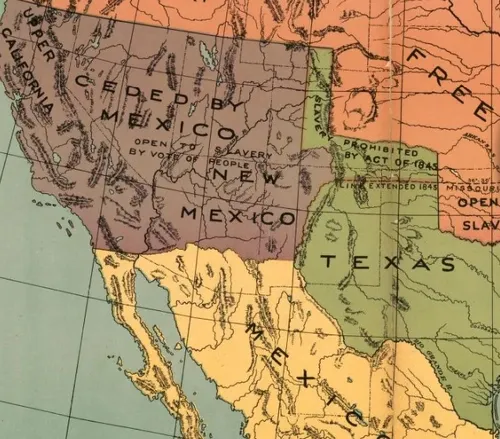
Earthborne Rangers is set in Colorado. Colorado became a part of the U.S. in 1848 with the Treaty of Guadalupe Hidalgo after the U.S. waged a war of colonial conquest on Mexico. And all of the sudden, Mexican citizens of all racial phenotypes and tribal afiliations found themselves interpreted by a new U.S. racial democracy. Mexico had created a liberal democracy that legally erased racial and tribal differences (as long as your tribe acquiesced and if it didn’t—war ensued). It created a formal equality that hid and made private the indigenous, mestizo and afro-mestizo struggles. And now all of the sudden the U.S. sees a bunch of brown people, and U.S. white society immediately began to dismantle the rights that those brown people were given in the treaty that ended the war.
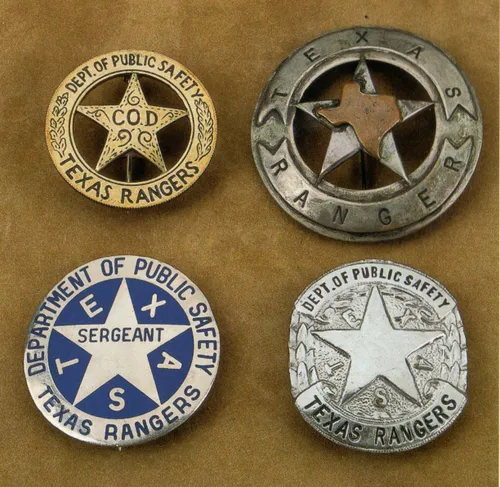
Rangers. Not Earthborne Rangers, but Texas Rangers, notoriously hunted, lynched and helped white settlers steal the land from its brown inhabitants. Read the newspapers of the day. Civilisation was what white people were bringing, and indigenous and/or brown folk had to be cleared out for civilisation to prevail.
So somehow, in the almost three millennia of history in which humanity found ways to unite and ended up living more in harmony with nature, the racist, colonial, white supremacist term civilisation is still hanging around.
And what do we do with Rangers themselves? Placing Rangers at the heart of the game is tied into a nostalgia about visits to National Parks in the U.S., especially Rocky Mountains National Park. Though the establishment of the National Parks was in itself an act of theft and colonialism, declaring land as “unpeopled” and “wild” and planting the idea that that’s how it always was and how it should be.
Are the descendants of the Ute and Arapaho a primary part of the Estian ancestors that created the arcology under the valley? Maybe. For those of you who haven’t yet delved into ER lore, the people that currently live in the valley migrated in from East, from the Missipian Sea, and the people that created the arcology beneath the ground of the valley are called Estians. Both groups matter for my decolonial reading.
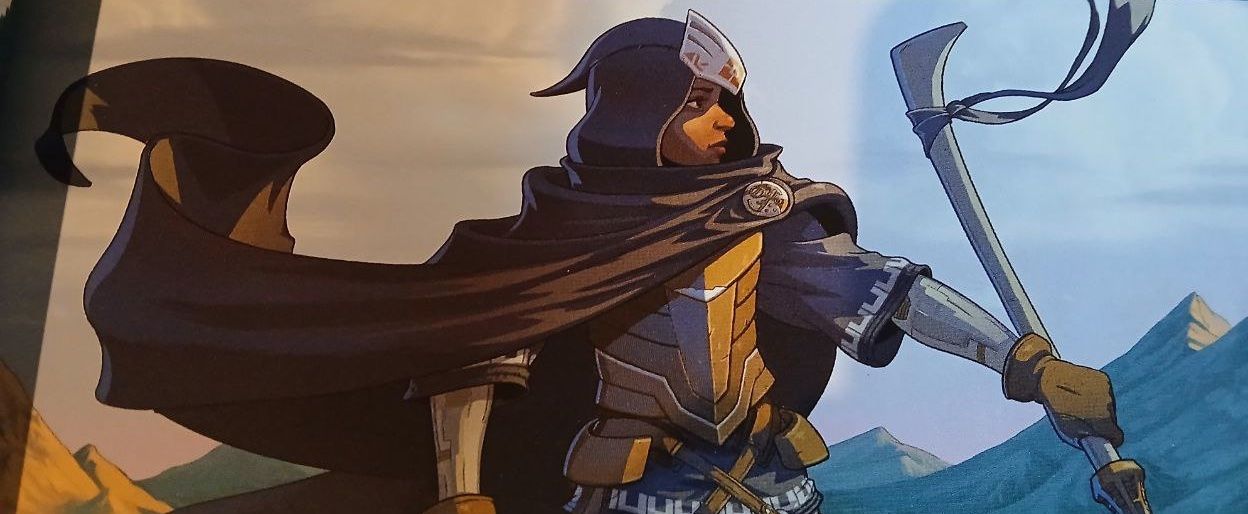
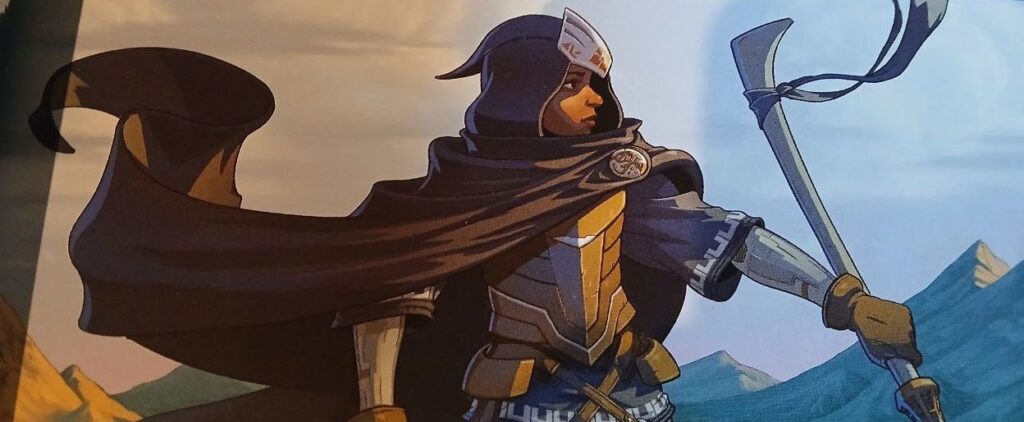
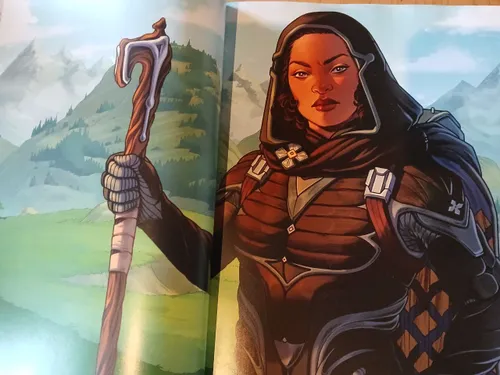
Some very interesting decisions were made in regards to the artistic depiction of the Rangers, the Elders, the rangers, and the vast majority of the denizens of the valley. They look like my ancestors. They look like other colonized people’s ancestors. They are black and brown.
When thinking about writing this review, I saw these depictions as an invitation, on the part of the creators of the game, for me to spill this beast of a decolonial text out into the gaming world, an invitation to grapple with the question of race and colonialism. After all, if you’re depicting me, then I’m gonna raise my voice up! Seems fair.
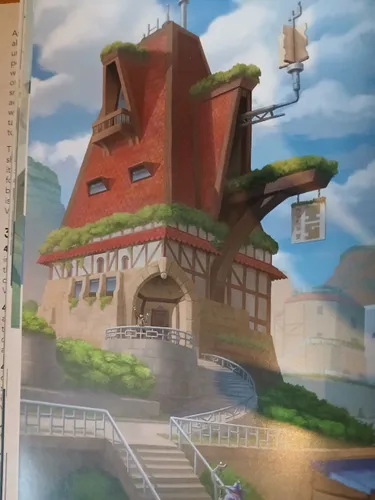
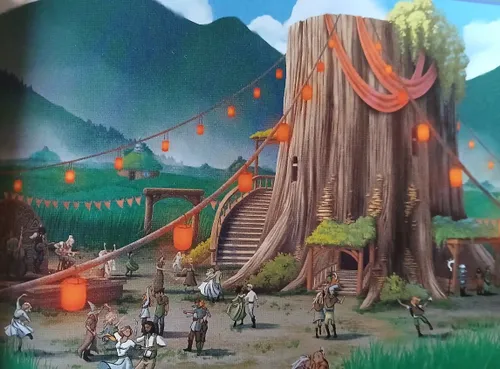
But what am I to make of the European aesthetic nostalgia that haunts the valley? After almost three thousand years, in that centre of “civilisation” lies a European style inn, described as such “The two-story inn and tavern is built as a hollow square with rooms opening up onto an open courtyard. Here you see guests sitting in wooden chairs with plates of food and flagons of spirits, most clustered around a flickering bonfire of multicoloured flames.”
Here, instead of individual rooms all shut off from each other we see a more non European social structure (rooms centred around a communal internal courtyard space, in the style of housing complexes at Teotihuacan) with a European nostalgic aesthetic, hanging Inn sign and all.
Traditional music and dancing culture seems to have a decidedly heavy European style. The foods described in a local market are all European inspired: freshly baked bread to moss-cherry preserves to smoked mutton. Where are my tortillas and beans!? And I won’t even mention the literary icons that I discovered down in the Arcology (seriously though y’all, I was trying to do an indigiplay run-through and ran into… no. No spoilers. Clearly, if there was some sort of empowerment of brown people in this line of history, then liberalism seems to have won the day, and we all gained formal equality only to lose our culture. Wait, except for the values. Spirituality, Communality, veneration of ancestors, respect for elders, attempts to have a somewhat balanced relationship with nature, etc. So why the European aesthetic veneer?
In my story, the only way that humanity could have figured out how to work together peacefully was to authentically confront the legacy of colonialism. There is no harmony without reparation.
The process that is going on right now today of indigenous peoples (Cheyenne and Arapaho, Hinono’ei, and the Ute Nations) reintegrating themselves into the significant landscapes of the “Rocky Mountains” was, in my story, recognised as a necessary and important spiritual reconciliation. The chicane descendants of the area after an appalling but short armed struggle pushed by some of their leaders, gave up their claims to an Aztlan empire in exchange for pan-indigenous unity. All these groups together are the ancestors that built the arcology.

Does Earthborne Rangers give me material to do this reading with? Yes! Signs of mesoamerican influence can be found in the powerful architecture that haunts the valley, and indeed, the shape of these “ziggurats” and what they might imply informed an important decision I was dithering on in the expansion, Legacy of the Ancestors. Also in the expansion we learn that the Arcology was called Vista. Which of course is Spanish for view. These are the Estians that built the arcology. These, and the minority community of white people that stayed under pan-indigenous leadership.
The current inhabitants of the valley have their own similar, but not identical story. Having migrated in from the Missipian Sea, they carry with them the old ways, rescued, revindicated, and reborn, along with a few European style touches in their culture, as generous gestures to the European descended peoples that decided to cast their lot with the leadership of descendants from ex-enslaved and colonized peoples. That explains the inn, some descriptions of food, dance, etc. For my own Indigplay joy it would be nice to see more influeces from our own cultures depicted in the game, but my imagination can do quite a lot. I CAN do this reading as I’m playing it through, and who knows? If Earthborne Games paid some indigenous and decolonizing writer geeks* to get involved in the storytelling, it could truly become a joyful playground of Indigplay as well as just being an incredibly good game.
There is one thing that confuses me, and that is that there are a few white folk still hanging around. After nearly three thousand years, how is everyone not now brown!? Or maybe all of us brown and black folks would be lighter skinned after a couple millennia underground. I get carried away.
If you are interested in Earthborne Rangers I highly recommend (if you have the means or community to do so) jumping straight in with the base game, Stewards of the Valley, and Moments on the Path to have the richest experience right from the start. Legacy of the Ancestors can wait for after, and the Doubler might start to feel helpful if you have a larger group of people wanting to play it.
There’s one more funny detail that I wanted to share on this theme, though it spoils a character you might meet in your campaign. One of the white NPCs is an artist, and she’s depicted as you might expect, taking her easel and canvas out into nature in order to paint the splendor, as Dolores from Westworld might have said. I find it funny precisely because she’s white. It’s the principle depiction of art in the world of ER, and it’s not a collectivized artistic endeaver, it’s not communal, it’s an individualistic activity, the lone artist out with her canvas and paints. It is in fact, European in its cultural origins. Somehow its funny to me that in this quite indigenous descended world, the white people are still somehow… so white.
I just recently asked someone for the money to buy a new vehicle. I live out in the woods, need a vehicle to survive, and my old Kia Sportage had packed it in. This time I got a 2001 Ford Ranger. Another Ranger in my life. I’m calling it Rinche-tuus. The Rinche part is because that’s what the Rangers were called by chicanes in Texas. Ranger is a difficult word to say in Spanish. Los rinches hunted them, drove them out and killed them. I’d like to think that the folks of Earthborne Rangers appropriated the name Ranger, not just because it was an appropriate word, but because it was funny to do so. Though it’s very possible that no one alive in the valley would ever even have heard of los rinches.
RESOURCES:
“Indigenous Connections at Rocky Mountain National Park”
https://storymaps.arcgis.com/stories/e96cd009a7864df0a556802…
“Indian Given, Racial Geographies across Mexico and the United States”, Maria Josefina Saldaña-Portillo. 2016 Duke University Press
“Coyote Valley: Deep History in the High Rockies”, Thomas Andrews.
Spirit Island Cultural Analysis | CASE Files, a conversation between Jason Perez, Dr Mary Flanagan and Cole Wherle.
https://www.youtube.com/watch?v=MO_wKdr0RoM