Our world is changing. What seemed solid has melted into new terrifying futures. But then, history has never stayed still for long, and students of movies or novels have long paid attention to how the stabilities and instabilities of the ages affect our cultural tastes. Board games are also cultural. They are conceived of, designed, developed and played in cultural contexts. The board game world has proven to be a slower adaptor to change than other mediums like movies and books. Games are a bigger investment than seeing a movie or reading a book. We spend more, we hope to get more out of it, sometimes we even hope to be playing it for the rest of our lives. They are long term investments and this slows down the cycle of cultural change. But slow doesn’t mean standing still.
What seemed solid has melted into new terrifying futures.
Let me start back at the beginning of my post-childhood gaming life. The very first game that I could call my own—as a teenager in the nineties—was Viceroys. It was a supremely white-supremacist colonial game. Not white supremacist as in groups of losers joining ICE to round up Brown and Black people into camps, but white supremacist as in, the great myths of European culture were white supremacist, and were cooked into the foundations of modern tabletop gaming. In Viceroys, every player represents a European imperial power and you send your ships out to the “New World” and global south to discover, explore, and colonize. Yeah, my first board game was about as colonial as it gets. And as a boricua teen, I came from a family with a colonized mentality. My parents believed that colonialism was fundamentally good. Bringing (white) superior culture to savages. Decolonialism is something that I have had to (and have to) do myself, stripping away the layers of crap that I was brought up to believe. In Viceroys, when your ship “discovered” global south soil you would take a resource chip out of a cup to see what was there. It was generally something like wood, or gold, or food.
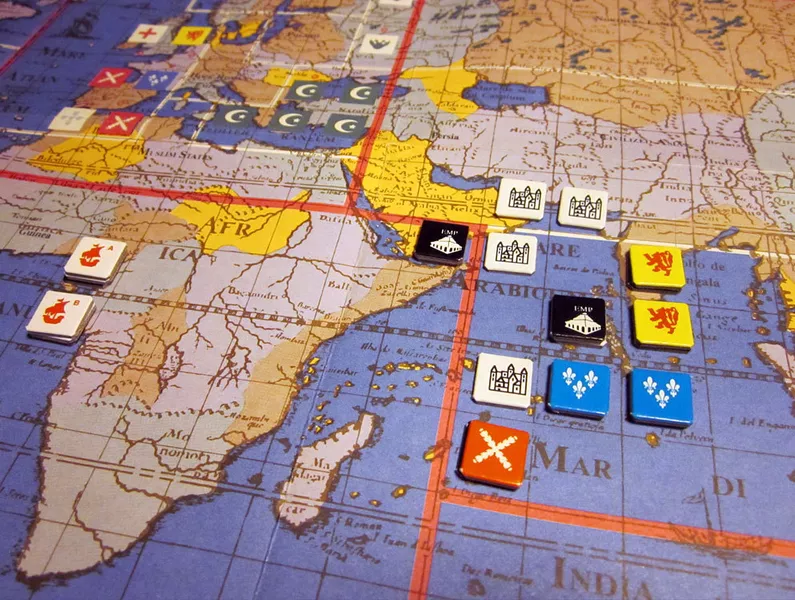
And sometimes it was Labor.
Yeah, that’s right. Labor.
And you can either attempt to setup a colony or just extract the “resource”, having to roll a die to see if the native population will fight back.
Just to be clear, the indigenous element of my ancestry that was “discovered” by the Spanish (what is being played out in this game), suffered rape, enslavement, and genocide by the Spanish. Some of our ancestors fought back, left the islands, hid in the mountainous interior and survived, but this game does to the island of Puerto Rico what the game Puerto Rico couldn’t be honest about it. It depicts the enslavement and murder of an important part of my ancestry. It is so unabashedly joyful in its imperialism and colonialism, it does us good to see how a game made in 1985 could be so libidinally colonialist in a way that wouldn’t be made today.
Sorry, what’s that? What’s happening in 2026?
They’re bringing out a new version of Viceroys? You’ve got to be kidding.
Surely the war gamers will come out to defend the moral neutrality of war gaming. Suggesting that playing history is not taking its side. But that’s missing the point. The hegemonic culture that we play in is the culture that followed on from the real world Viceroys. They conquered our peoples and wrote our histories for us. Of course we’re playing games from the perspective of the colonizers. The ways in which most modern war games are even conceived cannot be separated from the current and ongoing consequences of colonialism.
But this essay isn’t about Viceroys per se. Let’s get back to the core issue of taste. The question here isn’t just what games were available when I was a young teenager in the 90’s, the question is, why did I enjoy this particular game? One of the smartest marketing schemes ever created (long before marketing existed) was selling colonialism, rape, pillage and genocide as adventure. I have an adventurous streak, and can easily be convinced to change plans for a cheeky impulsive adventure. I love the idea of going somewhere new and “discovering” things that are completely new. The fact that we as individuals can identify with the marvel and awe of that completely legitimate experience gets caught up in and confused with going to someone else’s home, stealing everything inside and enslaving them to become wealthy. That’s not adventure. But as a young teenager whose parents had been sold on the idea of a colonialism, my taste for adventure and autistic love of complexity and spreadsheets was easily channelled through this war game about extracting “labor” from everyplace that is not Europe. What one culture considers to be adventure will change, depending on the values and views of that culture. Because our gaming world is mostly created by Eurodescendents, games that invoke adventure often invoke colonialism. Because that’s the trope. The Quest for El Dorado is literally about Europeans racing to try and steal our gold. The Lost Ruins of Arnak. Robinson Crusoe. Tikal. Some of the most respected games in our hobby history. What do they have in common? White people having adventure in the global south having adventure, often at our expense.
What if [eurogames] don’t feel like escape because they remind us, in the subconscious back of our heads, that life doesn’t really feel like that anymore.
Ok. Let’s do a hard break and change the tone of this essay completely. Let’s move on to when I’m in my twenties. I’m now an immigrant in London and my love for board games is rekindled. It’s 2008 and Agricola comes out. Our little game group is made up of Germans, one English guy who takes every racist chance he can to insist I’ll never really be British, and me. We absolutely fall in love with Agricola and play it every week. Little did I know that just a few years later I would be moving to a piece of land in southern Europe and building a self sufficient life up from scratch, discovering exactly how well the game Agricola models what it feels like to try and do that. Everything takes ten times longer than you think it will and if you just focus on building space for more people instead of trying to do it all yourself then those extra hands can really help you get a lot more done.
My board game life exploded with Euro goodness. Stefan Feld. Uwe Rosenberg. Games like Saint Petersburg, Notre Dame. An earlier era of direct conflict in Euro gaming, the greatest most everlasting example in my collection being Tigris & Euphrates, El Grande, gave way to non confrontational empire building and resource management.
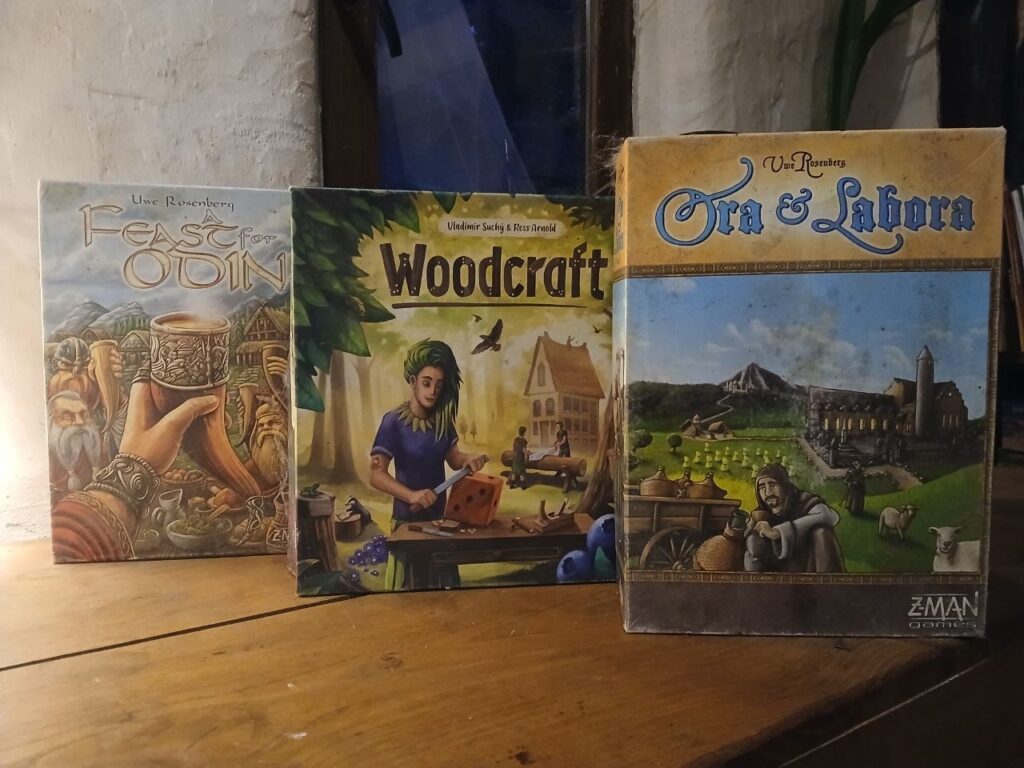
Power Grid. Brass. Ticket to Ride. The Castles of Burgundy. 7 Wonders. A Feast for Odin. Concordia. On Mars. These games create a sense of permanence, of progress, of building up. When you put the game away, you can imagine that whatever it is that you built will live on forever, eternally, because everything is always getting more complex, more advanced, with more and more resources coming your way to build ever more permanent whatevers. This is actually a very satisfying sensation. Especially to those of us raised in the myth of progress, whether it’s the liberal myth of upwards progress or the imperial myth of bringing progress to the world through the domination of the superior culture/races. Both European worldviews imbue us with a sense of participating in something that is built ever higher.
Empire-building expanded into a glut of contract fulfilling games with a similar premise. Luthier. Woodcraft. Unconscious Mind. The list is endless. The story that we are repeating over and over again is one of progress, of an ever more efficient machine being built up.
With a few exceptions the tableau buildings join the chorus. Race for the Galaxy, Wingspan, Terraforming Mars, Ark Nova. Expand. Grow. Race. The underlying logic is European. We’re not seeing verbs like maintain, care for, reproduce, sustain, refrain. Respect limits. The racing tendencies underlying these games usually have to have some kind of arbitrary cutoff point because they’re tied into the same absurd logic that underpins the idea that the capitalist economy can grow infinitely without shuffling the misery, slavery and exploitation around, as it constantly does.
Reviewers complain that each new Euro is mostly just a mashup up of previously seen materials, and the sage amongst us admit that new games are for new gamers, and that justifies the sameness that we’re seeing produced year after year. But what if it something different is happening?
Euro games (and European culture) struggle with the philosophy behind traditions that come from very different types of logic, like mandalas, for example. No, not euro ripped off mandala games, but the actual original mandalas, like the extraordinary Tibetan art that creates the most beautiful elaborate patterns and drawings with sand only to sweep it all away in a great lesson of ephemerality and the circle of life. Even when Euro games go trawling through other cultures’ history troves to mine for themes, the underlying logic is the same. Raja of the Ganges. Teotihuacan. The stories they tell are European stories in nature.
Now here’s where this Discourse takes a tricky turn. It’s hard to know for sure if one’s finger is on the Zeitgeist’s pulse, and these kinds of Euro games have shown themselves to have lasting appeal, tapping into some core cultural myths as they do, but I think that perhaps something is happening. I think perhaps we are in a moment of shift. The Euro-style titles that have come out recently seem more derivative than creative and innovative. Reviewers complain that each new Euro is mostly just a mashup up of previously seen materials, and the sage amongst us admit that new games are for new gamers, and that justifies the sameness that we’re seeing produced year after year. But what if it something different is happening?
What if the myth-of-progress euro games don’t quite hit the way they used to because they’re starting to feel a bit twee, more and more unrealistic in a thoroughly chaotic world.
I submit that the height of these endless growth euro games was in the late 2000’s, the 2010’s and perhaps early 2020’s, and that they coincide with the slow decline of more optimistic times, when the myth of progress still held more sway. As the world falls into instability, unpredictability, open war, the rise of fascistic authoritarianism and climate crises, perhaps our game tastes are going through a collective shift that we haven’t entirely noticed yet. It’s a staple of movie criticism that during chaotic periods moviegoers shun realistic dramas for escapist fantasy and science fiction. What would escapism look like in board game form? Long and involved campaign games that distract us by creating massive worlds for us to dive into? Gloomhaven, Arydia, Slay the Spire. It is no coincidence that Gloomhaven was my solace during the pandemic lockdowns. Postmodern mashups of previously discarded mechanisms to create silliness and zaniness, as in Magical Athlete and Hot Streak. Perhaps it’s also not a coincidence that The Lord of the Rings is absolutely dominating as a setting for popular board games. Is that the ludic version of cinematic fantastic escapism?
Do euro games not fill that escapist need? What if the myth-of-progress euro games don’t quite hit the way they used to because they’re starting to feel a bit twee, more and more unrealistic in a thoroughly chaotic world. What if they don’t feel like escape because they remind us, in the subconscious back of our heads, that life doesn’t really feel like that anymore.
Opportunistic designers might want to mine declining empires for materials—historical moments when a certain order gave way to unsettling uncertainty, and a rush to fill the vacuum.
Of course euro games will still find their fans, just as there are still plenty of colonialist fan boys out there that will have fun cosplaying conquistadores committing genocide and slavery in the 2026 reboot of Viceroys. These things never really go away, but they lose their moment. For those willing to face the vibes of the age we’re in, something like Cole Wehrle’s Arcs creates a game space that more clearly mirrors an age of chaos. The empire is in decline, and a multiplicity of freak-interests, growing ambitious powers, and would be strong men rush in to fill the vacuum of decaying old order. The stories Arcs generates feel timely. The Old King’s Crown also fits the bill. Opportunistic designers might want to mine declining empires for materials—historical moments when a certain order gave way to unsettling uncertainty, and a rush to fill the vacuum.
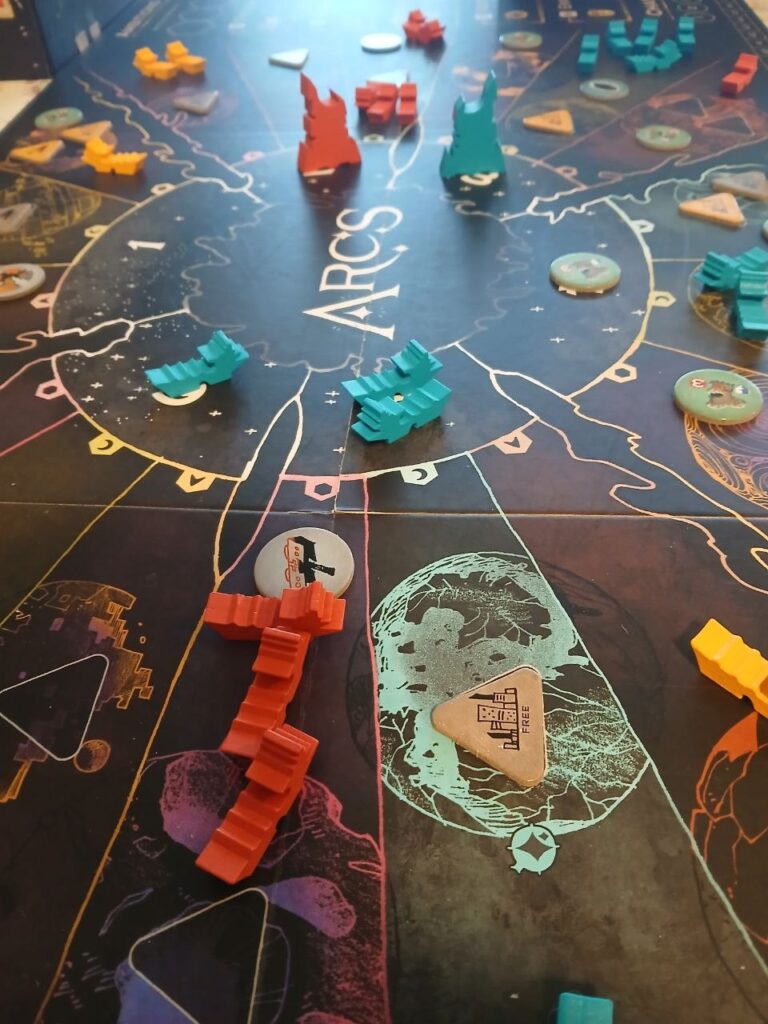
Going back to my own personal story, I can clearly see that my love of progress construction games coincided with periods of my life in which I desperately craved stability and permanence. But of course, nothing is really permanent, and fortunately for me, I went through some wholly transformative and powerful rounds of therapy that helped me with a lot of my life issues and have brought me to the personal point where my own inner strength is sufficiently high that I’m ready to be faced with loss, catastrophe and extreme adaptation. Just in time for the historical winds that we’re facing.
I’m ready to play Arcs, or Oath, or Oceans or Nature (I’m not sure I have the group for Old King’s Crown.)
My own tastes have changed with time, but I suspect that there are larger changes than just mine underfoot in our hobby. Also, coming full circle, my taste for adventure is renewed. Though I have grown up, and would clearly no longer enjoy a game like Viceroys, games like Earthborne Rangers hit the spot. Being ready to move forward in such uncertain times requires a certain adventurous energy. But is Earthborne Rangers, with its fundamentally optimistic underpinning, also escapist? That wouldn’t necessarily be a bad thing in of itself. Perhaps it’s a whole different essay to talk about escapism and board games. When we make social and cultural critiques of board games we often hear in response ‘but they’re just games! we play games to escape all of that stuff’. But of course, as should be clear from this essay, one white man’s escapism is another Brown transfemme’s colonial nightmare. That became clear in the conversations around Lacerda’s new game, The Resort. What precisely does our escapist art do? What does it show about us? What world values is it based on, and perpetuate? What new possible world perspectives does it open up? Or what unheard voices does it make louder? Escapism itself doesn’t escape history. It’s a part of it.
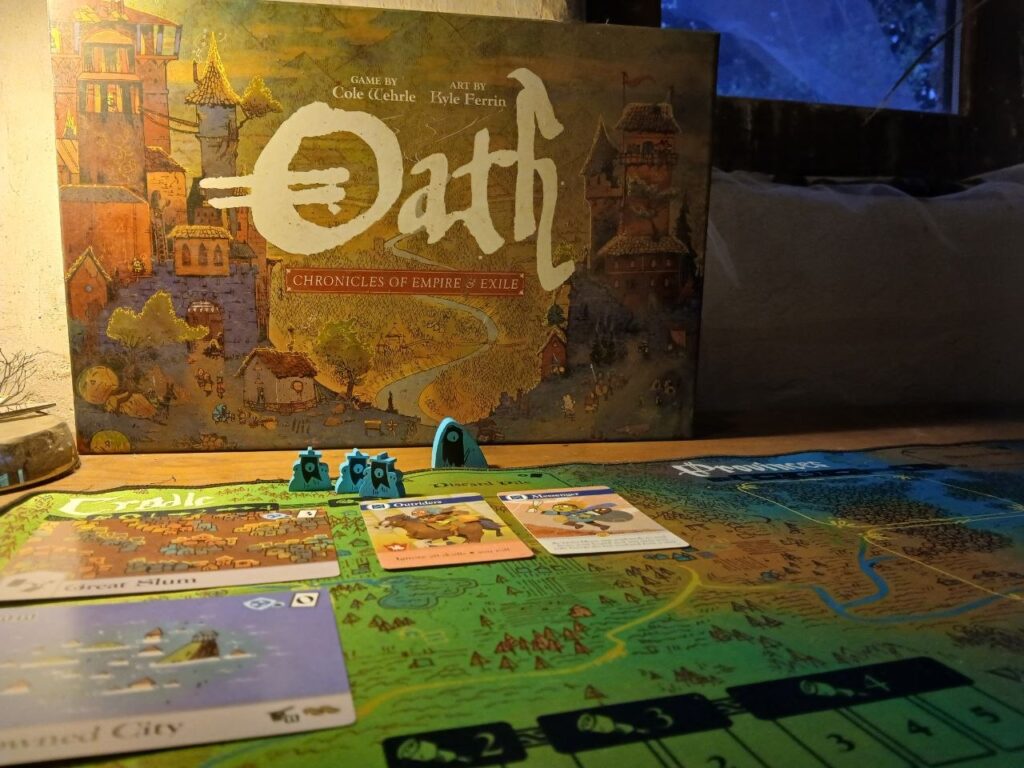
Undoubtedly, the political times we live in are going through rapid change, upheaval, and disintegration. We might not yet be in the best position to see clearly how that is affecting the games we like to play—that’s usually best seen with hindsight—but given the scale of the social changes we are living through, I think we can be pretty confident that something is rumbling beneath our hobby.